The ending hinges on who returns
Village in the Shade has two documented story endings, centered on whether Ame returns or lets Kodama return. Both are bittersweet, but Ame's return offers the more hopeful conclusion. Your starting mode also matters: the peaceful farming option prevents the story progression needed to reach these outcomes.
Major spoilers follow, including Ame's identity, the child in the opening scene, and the central ending decision.
TV Tropes identifies the two outcomes and distinguishes their emotional tone:
| Ending choice | Overall tone | What to expect emotionally |
|---|---|---|
| Ame chooses to return | More hopeful | A bittersweet resolution that leans toward happiness |
| Ame lets Kodama return | More somber | A bittersweet resolution with a stronger sense of loss |
These descriptions help you choose according to the conclusion you want to experience. They do not establish a reward ranking or an official “good ending” designation.
Choose the story mode before you begin
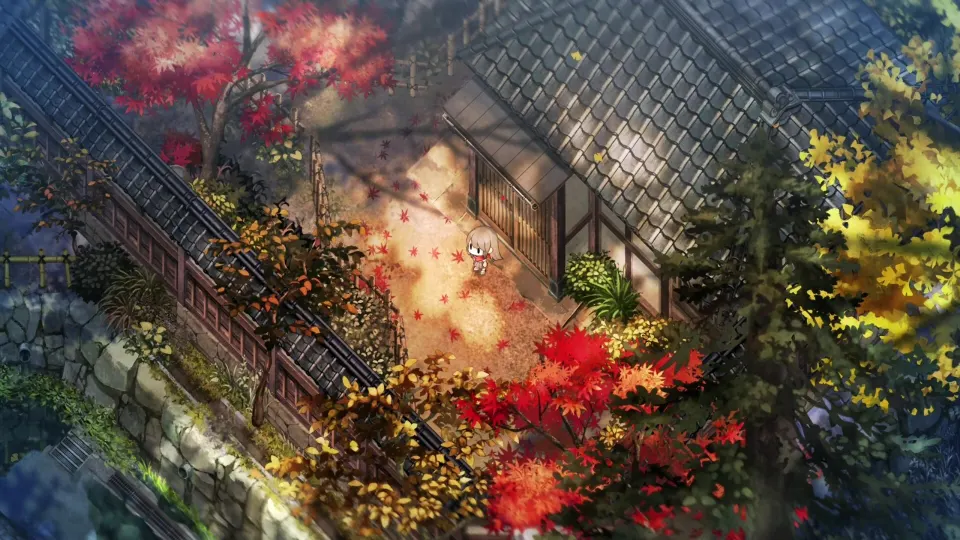
The first important decision happens when you start a new game. To experience the supernatural storyline and its endings, select the full Village in the Shade mode.
LadiesGamers calls the relaxed alternative Village in the Sunshine, while TV Tropes describes it as Peaceful Life Mode. Both accounts agree that your mode choice cannot be changed during the game.
| Starting option | Experience | Consequence for the story ending |
|---|---|---|
| Village in the Shade | Farming combined with supernatural events and horror | Allows the exploration needed to advance the main mystery |
| Village in the Sunshine / Peaceful Life Mode | Peaceful village life focused on farming | Prevents the rulebreaking required for key story events |
The restriction is more significant than a reduction in difficulty. TV Tropes explains that Peaceful Life Mode makes the village code impossible to break. Since some essential events require nighttime exploration and other violations, that protection also blocks narrative progress.
For a playthrough aimed at reaching an ending:
- Choose the full story mode when creating the game.
- Expect nighttime exploration to become part of your progress.
- Follow developments involving the village's secrets alongside your farming routine.
- If you already chose the peaceful option, begin a separate playthrough in the story mode.
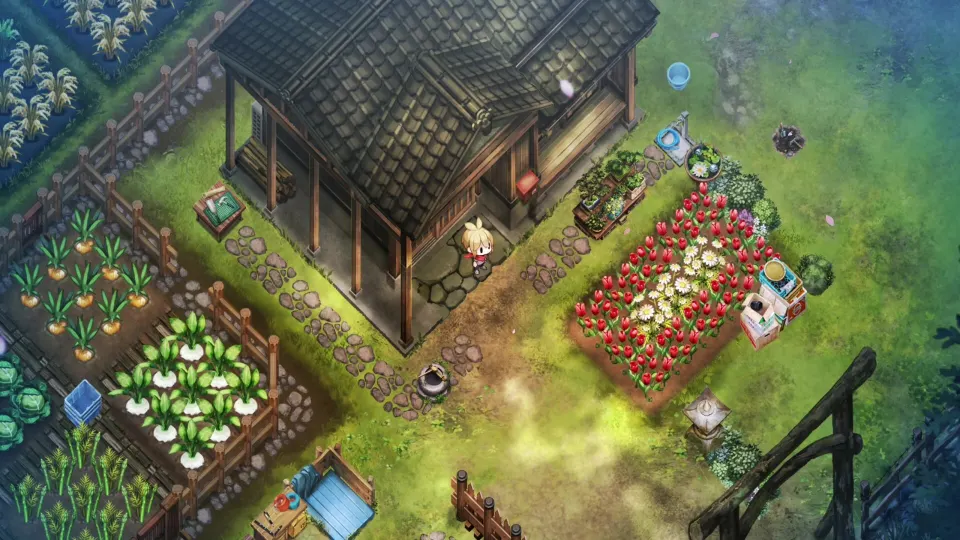
The peaceful option remains a substantial farming experience. However, expanding the farm within that mode does not remove its story restrictions. If resolving Kagatsu's mystery is your priority, make the mode decision before investing heavily in that save.
Ame, Kodama, and the opening scene explained
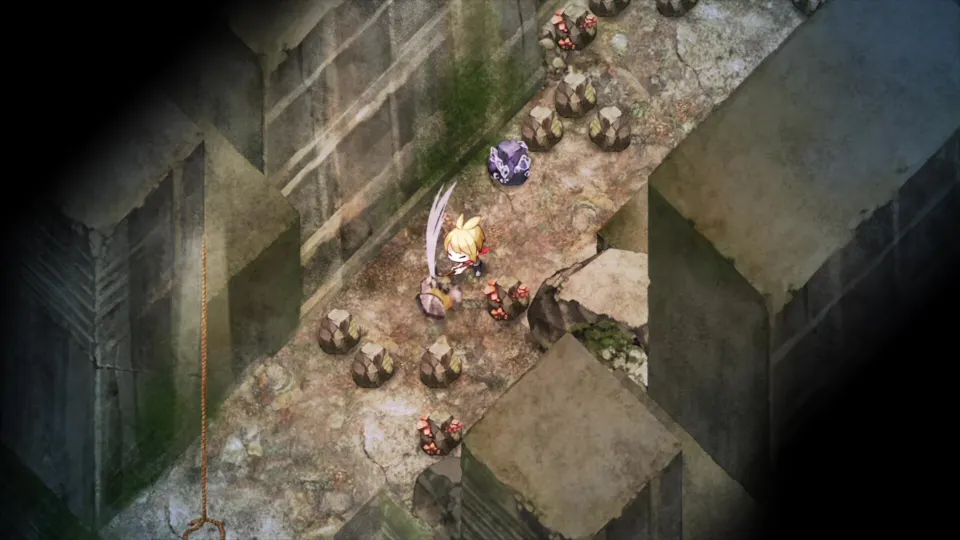
The opening presents a child tending farmland, following a chicken, and eventually falling into a pit. TV Tropes identifies that child as Kodama. This matters because the protagonist you later control, commonly called Ame, has a different identity despite the familiar appearance.
According to TV Tropes, Ame is a god inhabiting the body of Kisuke's deceased sibling. The resemblance that unsettles the villagers therefore has a concrete explanation: the body belonged to Kodama.
| Character | Connection to the mystery | Why it matters at the ending |
|---|---|---|
| Ame | A god occupying Kodama's former body | Ame's identity is separate from the body's original owner |
| Kodama | The child associated with the opening tragedy | Letting Kodama return is one of the ending choices |
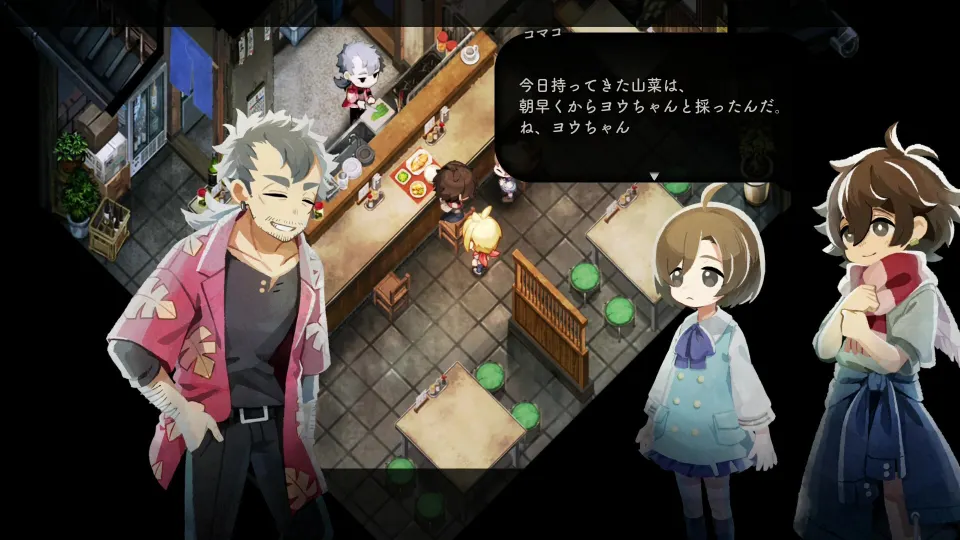
| Kisuke | Kodama's older sibling | He recognizes the connection between Ame and his lost sibling |
LadiesGamers describes the village arrival as taking place ten years after the child's disappearance. That interval explains why the villagers react to a resemblance that the newcomer cannot initially understand.
Kisuke's behavior gains another meaning once the truth emerges. TV Tropes states that he knows Ame's nature from the beginning. His relationship with the protagonist therefore carries knowledge and grief that the player does not initially share.
Ame's responses to requests also foreshadow the revelation. Offers of something in exchange repeatedly persuade Ame to help. TV Tropes connects this pattern to the game's depiction of gods being compelled by prayers accompanied by appropriate payment.
The ending consequently concerns more than choosing who leaves a dangerous place. It brings together two identities connected to one body, the life Ame has experienced, and the loss surrounding Kodama.
What the two ending choices mean
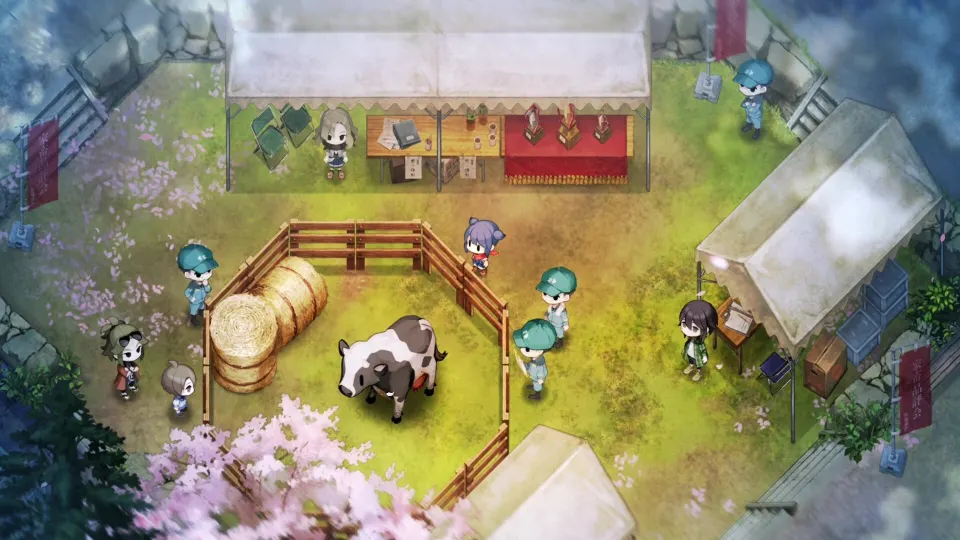
Choosing Ame's return
Choose Ame's return if you prefer the more hopeful of the two documented conclusions. TV Tropes explicitly places this outcome closer to the happy side of the game's bittersweet ending structure.
Emotionally, this choice gives greater weight to Ame's experiences during the playable story. You have worked the farm, learned the village's customs, and formed connections while gradually discovering that the protagonist is not who they first appeared to be.
That is an interpretation of the choice's significance, rather than an additional unlock condition. A successful harvest, a particular decoration, or a favorite villager should not be treated as evidence that you have secured this outcome.
Letting Kodama return
The alternative gives Kodama the opportunity to return. TV Tropes describes its atmosphere as more sorrowful, with the bitter side of the resolution carrying greater weight.
Kodama's relationship to the opening gives this option its emotional force. The body at the center of the story had a history before Ame's arrival, and Kisuke's connection to that history makes the decision personal.
If you find Kodama's place in the story especially compelling, this is the corresponding choice. Expect a heavier conclusion rather than assuming that restoring something lost necessarily produces an uncomplicated happy ending.
How the finale brings the village together
TV Tropes describes one ending's credits as a communal rescue: villagers work together to pull Ame, Kisuke, Rin, and Tobari out of the opening pit.
The scene brings the story back to its starting location while emphasizing the community's involvement. It also fits the game's recurring concern with obligations, promises, and what people give for one another. The villagers' relationships become part of the resolution, extending the stakes beyond the protagonist alone.
Preparing for the final story events
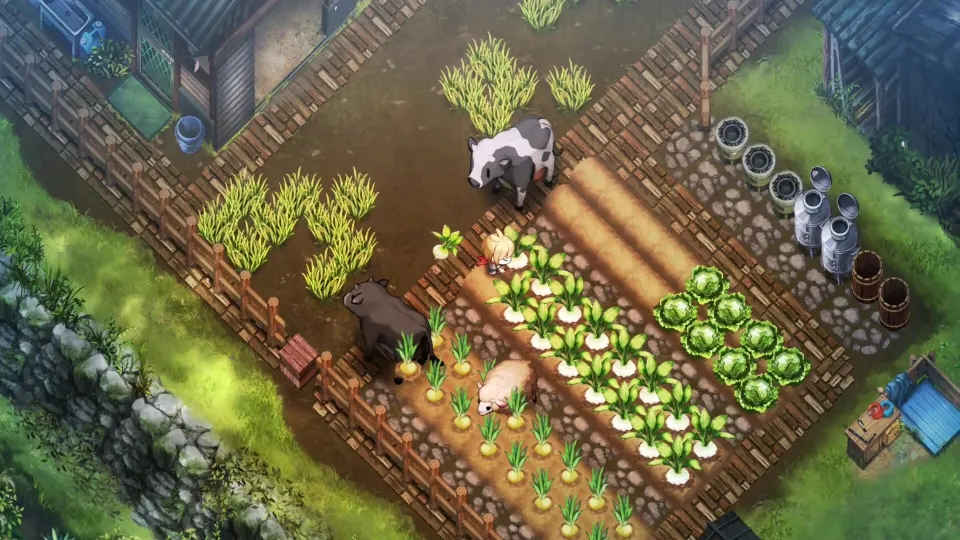
Reaching the finale requires pursuing the supernatural story while maintaining enough resources to explore. Your farm supports that effort through food, stamina, and equipment improvements.
Inven's review describes a connected progression loop: crops become food, food supports stamina, exploration produces minerals, and those minerals contribute to better tools. Keeping that loop working makes the journey toward the ending more manageable.
| Preparation | Practical value | How to use it |
|---|---|---|
| Grow crops and prepare food | Supports stamina for exploration | Maintain a dependable supply while pursuing story events |
| Gather minerals and improve tools | Strengthens the farming and resource loop | Upgrade equipment as materials become available |
| Explore at night in story mode | Enables essential supernatural encounters | Treat nighttime activity as part of narrative progression |
| Read collectible documents | Adds context about the village, gods, and spirits | Use them to understand revelations and character motives |
These are preparation priorities, rather than a complete sequence of ending triggers. Reading background documents can make the conclusion easier to understand, but a requirement to collect every document has not been officially confirmed.
The village rules deserve particular attention because they connect ordinary routines to the mystery. In the Console Creatures developer interview, the developers explain that the rules were designed around the story and its themes. Their narrative importance helps explain why unquestioning obedience cannot carry you through the full storyline.
Before committing to late story events, check the save options available to you. Requirements for seeing both endings on one file, and reliable save-and-reload behavior around the ending decision, have not been officially confirmed. Avoid planning your entire playthrough around an assumed opportunity to immediately reverse the choice.
FAQ
Which village in the shade ending is more hopeful?
Ame's return is the more hopeful outcome, according to TV Tropes. Letting Kodama return produces the more somber conclusion. Both retain sadness, so the distinction is about their emotional balance rather than one being completely happy.
Can Peaceful Life Mode reach either story ending?
Peaceful Life Mode blocks the rulebreaking needed for key narrative events. It therefore prevents the progression required for these story conclusions. Because the mode cannot be changed during play, start a new game in the full story mode if you want to pursue the endings.
Are Ame and Kodama the same person?
They have distinct identities. TV Tropes explains that Ame is a god inhabiting the body that belonged to Kodama, Kisuke's deceased sibling. This is why the protagonist can resemble the missing child while lacking the understanding other characters associate with that appearance.
Do I need to complete every farming activity?
A requirement to complete every farming activity has not been officially confirmed. Farming supplies resources that support exploration, but completing crop collections or maximizing the homestead should not be presented as a verified condition for either ending.
Can I see both endings on the same save?
A dependable method for viewing both outcomes on one save has not been officially confirmed. Check your available saves before advancing through late story events, and do not assume that completing one ending automatically unlocks a replay menu or preserves the decision point.